Mastering Financial Forecasting for Growth

Navigating the complexities of the modern business landscape demands more than just reacting to present circumstances; it requires a proactive, forward-looking approach. Businesses, regardless of their size or industry, face constant pressure to make informed decisions about resource allocation, strategic investments, and future growth trajectories. This is where financial forecasting emerges as an indispensable tool, offering a powerful lens through which organizations can visualize their potential future financial standing. It’s not merely about predicting the unknown, but rather about building a robust framework based on historical data, current trends, and anticipated events to project revenues, expenses, and cash flows.
The ability to accurately anticipate financial outcomes allows leaders to mitigate risks, seize opportunities, and allocate capital more efficiently. Without a clear financial roadmap, businesses often operate in the dark, leading to reactive decisions that can hinder long-term sustainability and growth. Effective forecasting equips management with the insights needed to set realistic goals, identify potential shortfalls or surpluses, and prepare for various economic scenarios.

In essence, financial forecasting transforms uncertainty into manageable projections, providing the clarity necessary for strategic planning and operational excellence. It bridges the gap between aspirations and actionable steps, enabling organizations to move beyond mere survival towards sustained prosperity. This article delves into the core principles, methodologies, and practical applications of financial forecasting, emphasizing its pivotal role in driving business success and achieving ambitious growth targets.

What is Financial Forecasting?
Financial forecasting is the process of estimating a company's future financial performance. It involves using historical data, current economic conditions, and various assumptions to predict future revenues, expenses, profits, and cash flows. The primary objective is to provide a reasonable approximation of what a company's financial statements (income statement, balance sheet, and cash flow statement) might look like over a specific future period, typically ranging from a few months to several years.

This analytical discipline is not about crystal-ball gazing but rather about applying systematic techniques to historical patterns and known variables to construct a probable future scenario. It’s an iterative process, meaning forecasts are frequently updated and refined as new information becomes available and as actual results deviate from initial projections. The accuracy of a financial forecast hinges on the quality of data used, the validity of underlying assumptions, and the sophistication of the chosen forecasting methodology.

The Core Elements of Financial Forecasting
At its heart, financial forecasting relies on several key components that collectively paint a picture of future financial health. Understanding these elements is crucial for building robust and reliable predictions.
- Revenue Forecasting: This is often the starting point, estimating future sales and income. It considers factors like market demand, pricing strategies, sales trends, and economic indicators.
- Expense Forecasting: Predicting future costs, including fixed costs (rent, salaries) and variable costs (cost of goods sold, utilities), is essential for profitability analysis.
- Cash Flow Forecasting: Perhaps one of the most critical elements, this involves projecting the movement of cash into and out of the business. It helps ensure liquidity and solvency, identifying potential cash shortages or surpluses.
- Capital Expenditure (CapEx) Forecasting: Estimating future investments in long-term assets like property, plant, and equipment is vital for strategic growth planning and funding requirements.
- Balance Sheet Forecasting: Projecting future assets, liabilities, and equity provides a comprehensive view of the company's financial position at a future point in time.
Why Mastering Financial Forecasting is Essential for Growth
In an increasingly competitive global economy, the ability to look ahead and prepare is not just an advantage; it's a necessity. Mastering financial forecasting provides a foundational layer for sustainable business growth by enabling proactive decision-making and strategic alignment across the organization.

Firstly, it facilitates informed decision-making. When companies have reliable forecasts, they can make better choices regarding investments, hiring, product development, and market expansion. For instance, a forecast indicating strong revenue growth might prompt a company to invest in new production capacity, while a projected downturn could lead to cost-cutting measures.
Secondly, forecasting is crucial for resource allocation and budgeting. It helps businesses allocate their limited resources—financial, human, and operational—to areas that promise the highest returns. Annual budgets are often built directly from detailed financial forecasts, ensuring that spending aligns with strategic objectives and anticipated revenues. This prevents overspending in some areas and under-investment in others.
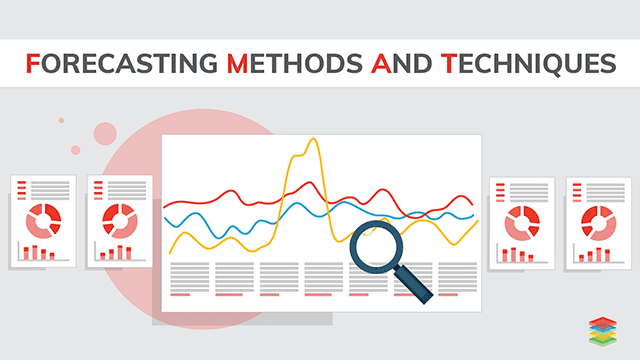
Thirdly, it significantly improves risk management. By identifying potential financial shortfalls or liquidity issues in advance, companies can develop contingency plans, secure additional financing, or adjust their operations to mitigate adverse impacts. Conversely, forecasting can also highlight opportunities, allowing businesses to capitalize on favorable market conditions.
Finally, effective financial forecasting enhances investor confidence and stakeholder communication. For public companies or those seeking external funding, robust forecasts demonstrate financial acumen and a clear vision for the future, making the business more attractive to investors, lenders, and partners. It provides a credible basis for discussions about future performance and strategic direction.
Key Methodologies and Approaches in Financial Forecasting
The accuracy and utility of financial forecasts depend heavily on the methodology employed. Various approaches exist, each with its strengths and weaknesses, suitable for different contexts and data availability.
- Qualitative Forecasting: This method relies on expert opinions, market research, and subjective judgment, particularly useful when historical data is scarce or when significant market shifts are anticipated. Examples include the Delphi method, market surveys, and executive opinions. While less data-driven, it can capture nuances and expert insights that quantitative methods might miss.
- Quantitative Forecasting: This approach uses historical data and mathematical models to predict future outcomes. It assumes that past patterns will continue into the future.
- Time Series Analysis: This involves analyzing past data points collected over a period to identify patterns, trends, seasonality, and cycles. Common techniques include:
- Moving Averages: Calculating the average of past data points over a specific period to smooth out short-term fluctuations and identify trends.
- Exponential Smoothing: Similar to moving averages but gives more weight to recent observations, making it more responsive to recent changes.
- ARIMA (AutoRegressive Integrated Moving Average): A sophisticated model that captures more complex patterns, including autoregressive (dependence on past values) and moving average components.
- Regression Analysis: This statistical method examines the relationship between a dependent variable (e.g., revenue) and one or more independent variables (e.g., marketing spend, economic growth). It helps determine how changes in independent variables might impact the dependent variable.
- Econometric Models: These are advanced regression models that incorporate economic theories and multiple variables to create comprehensive forecasts, often used for macro-economic predictions.
- Time Series Analysis: This involves analyzing past data points collected over a period to identify patterns, trends, seasonality, and cycles. Common techniques include:
Top-Down vs. Bottom-Up Forecasting
Beyond the specific mathematical techniques, forecasting can also be categorized by its organizational approach:
- Top-Down Forecasting: This approach starts with an overall company or market forecast and then breaks it down into segments, departments, or individual products. For example, a CEO might project overall company revenue, which is then allocated to individual product lines. It's often quicker but can lack granular detail.
- Bottom-Up Forecasting: This method begins at the most granular level (e.g., individual sales, specific projects, department expenses) and aggregates these figures upwards to arrive at an overall company forecast. While more labor-intensive, it typically yields more accurate and detailed predictions, as it builds from operational realities.
Most effective financial forecasting efforts combine elements of both qualitative and quantitative methods, as well as top-down and bottom-up approaches, to create a well-rounded and robust set of projections.
The Process of Effective Financial Forecasting
Executing a valuable financial forecast is a systematic process that requires careful planning, data management, and continuous refinement. Following a structured approach helps ensure accuracy and relevance.
- Define the Forecasting Objective and Horizon: Clearly articulate what the forecast aims to achieve (e.g., predict quarterly revenue, assess cash flow for a new project, plan for annual budget) and the specific time period it covers (e.g., next month, next quarter, next fiscal year, 3-5 years). The objective dictates the level of detail and the most appropriate methodology.
- Gather Relevant Data: Collect comprehensive historical financial data (sales records, income statements, balance sheets, cash flow statements), operational data (customer acquisition costs, production volumes), and external data (economic indicators, industry trends, competitor performance). Data quality is paramount; inconsistencies or inaccuracies will propagate throughout the forecast.
- Identify and Document Assumptions: This is a critical step often overlooked. Forecasting inherently involves assumptions about future events and conditions. These might include assumptions about sales growth rates, pricing changes, inflation, interest rates, exchange rates, and technological advancements. All assumptions must be clearly documented, justified, and reviewable, as they directly impact the forecast's validity.
- Choose Appropriate Methodologies and Build Models: Based on the objective, available data, and nature of the business, select the most suitable forecasting techniques (e.g., time series, regression, qualitative methods). Develop financial models (often in spreadsheets or specialized software) that incorporate the historical data and assumptions to generate the projected financial statements.
- Analyze and Interpret the Forecast: Once the initial forecast is generated, rigorously analyze the results. Do they seem plausible? Are there any unexpected spikes or dips? Conduct sensitivity analysis by altering key assumptions to see how the forecast changes, revealing its robustness to varying conditions. Perform scenario planning (e.g., best-case, worst-case, most likely) to understand potential outcomes.
- Communicate and Present Findings: Clearly communicate the forecast, its underlying assumptions, and the implications to relevant stakeholders (management, board, investors). Visualizations like graphs and charts can help convey complex information effectively. Transparency about assumptions and potential limitations builds trust.
- Monitor, Review, and Revise: Financial forecasting is an iterative process, not a one-time event. Continuously monitor actual performance against the forecast. Identify deviations and analyze their causes. Use these insights to refine assumptions, adjust models, and update future forecasts. This feedback loop is essential for improving accuracy over time.
Overcoming Challenges in Financial Forecasting
Despite its undeniable value, financial forecasting is fraught with challenges that can impede its accuracy and usefulness. Recognizing these hurdles and implementing strategies to overcome them is crucial for effective prediction.
One significant challenge is data quality and availability. Forecasts are only as good as the data they are built upon. Incomplete, inaccurate, or inconsistent historical data can lead to skewed projections. Businesses may also lack sufficient historical data, especially for new products or in rapidly evolving markets.
Market volatility and external factors present another major hurdle. Economic downturns, geopolitical events, technological disruptions, changes in consumer behavior, and new regulations can all rapidly shift market dynamics, making long-term predictions highly uncertain. These exogenous variables are often difficult to predict and incorporate into models.
Human bias can also subtly undermine forecasting accuracy. Optimism bias, anchoring to initial estimates, or a reluctance to challenge assumptions can lead to overly conservative or aggressive forecasts that do not reflect reality. Groupthink within a management team can also skew projections.
Best Practices for Accurate Financial Forecasting
To enhance the reliability of financial forecasts, consider the following best practices:
- Invest in Data Management: Prioritize clean, accurate, and accessible data. Implement robust data collection and storage systems. Consider data validation processes to ensure consistency.
- Embrace Scenario Planning: Instead of relying on a single "most likely" forecast, develop multiple scenarios (e.g., optimistic, pessimistic, realistic). This helps prepare for a range of possibilities and assesses the resilience of financial plans under different conditions.
- Regularly Review and Update: Forecasts are living documents. Establish a routine for reviewing actual performance against forecasts and update projections frequently (e.g., monthly or quarterly). This allows for quick adjustments to changing circumstances and improves long-term accuracy.
- Incorporate Both Quantitative and Qualitative Insights: While quantitative models provide a structured approach, human judgment and qualitative insights from sales teams, market experts, and industry analysts are invaluable for identifying emerging trends or anticipating non-quantifiable events.
- Foster Cross-Functional Collaboration: Involve various departments—sales, marketing, operations, human resources—in the forecasting process. Their unique perspectives and data can significantly enhance the accuracy and relevance of the predictions.
- Be Transparent About Assumptions: Clearly document all assumptions made during the forecasting process. This not only makes the forecast easier to understand but also allows for easier modification if assumptions change. It also helps stakeholders understand the basis of the projections.
- Utilize Technology: Leverage specialized forecasting software, business intelligence tools, and even advanced analytics (AI/ML) to automate data processing, build complex models, and conduct sophisticated analyses more efficiently and accurately.
By actively addressing these challenges and adhering to best practices, organizations can transform financial forecasting from a burdensome task into a powerful strategic asset.
Leveraging Technology for Advanced Financial Forecasting
The digital age has revolutionized the way businesses approach financial forecasting. Manual, spreadsheet-driven processes are increasingly being augmented or replaced by sophisticated technological solutions that offer greater accuracy, efficiency, and depth of analysis. Leveraging the right tools is no longer a luxury but a necessity for competitive businesses.
Spreadsheet Software (e.g., Microsoft Excel, Google Sheets): While often the starting point, advanced spreadsheet features can still be powerful. Functions like pivot tables, data validation, goal seek, solver, and various statistical functions allow for complex model building. However, they can become cumbersome for very large datasets or complex, interconnected forecasts, increasing the risk of errors and limiting collaboration.
Specialized Financial Planning & Analysis (FP&A) Software: These dedicated platforms are designed specifically for budgeting, forecasting, and reporting. They offer numerous advantages over spreadsheets:
* Centralized Data: Consolidate data from various sources (ERPs, CRM, HR systems), ensuring data integrity and consistency.
* Automated Processes: Streamline data collection, report generation, and scenario modeling, reducing manual effort and errors.
* Advanced Modeling Capabilities: Support complex financial models, driver-based planning, and multi-dimensional analysis with greater ease.
* Collaboration Features: Enable multiple users to work on forecasts simultaneously, with version control and audit trails.
* Scenario Planning & Sensitivity Analysis: Facilitate the creation and comparison of multiple scenarios more efficiently, allowing for robust risk assessment.
* Dashboards & Visualizations: Provide clear, intuitive visualizations of forecasts and actuals, aiding in interpretation and communication. Examples include Anaplan, Adaptive Planning (Workday), Oracle EPM Cloud, and SAP Analytics Cloud.
Business Intelligence (BI) Tools: While not strictly forecasting tools, BI platforms (e.g., Tableau, Power BI, Qlik Sense) are invaluable for analyzing historical data, identifying trends, and presenting forecasting results. They can connect to various data sources and create dynamic dashboards that offer deep insights into financial performance, which can then inform forecasting models.
Artificial Intelligence (AI) and Machine Learning (ML): These cutting-edge technologies are transforming forecasting by identifying subtle patterns and relationships in vast datasets that human analysts might miss.
* Predictive Analytics: ML algorithms can analyze historical data to predict future outcomes with high accuracy, even in dynamic environments.
* Anomaly Detection: AI can identify unusual data points or deviations from expected patterns, highlighting potential issues or opportunities.
* Automated Forecasting: Some AI-powered tools can automatically select the best forecasting models for a given dataset and generate predictions with minimal human intervention, freeing up financial analysts for more strategic tasks.
* Inclusion of Unstructured Data: AI can process not only numerical data but also unstructured data like news articles, social media sentiment, or weather patterns to enhance forecasting accuracy, especially for market-driven predictions.
While integrating advanced technology requires an initial investment and learning curve, the long-term benefits in terms of accuracy, efficiency, and strategic insights make it a worthwhile endeavor for any organization serious about mastering its financial future.
Conclusion
Financial forecasting is far more than a mere numbers game; it is the strategic bedrock upon which sustainable business growth is built. By systematically analyzing historical data, incorporating astute assumptions, and leveraging appropriate methodologies, organizations gain invaluable foresight into their future financial landscape. This proactive approach empowers leaders to make informed decisions, optimize resource allocation, mitigate risks, and seize emergent opportunities with confidence.
Mastering financial forecasting requires a commitment to data quality, a willingness to embrace iterative refinement, and an openness to diverse methodologies—from qualitative insights to sophisticated AI-driven analytics. The ability to peer into the financial future, even with inherent uncertainties, transforms reactive management into strategic leadership. In an ever-evolving market, a robust financial forecasting capability is not just an advantage; it is an essential competency that drives resilience, fosters innovation, and ultimately paves the way for sustained prosperity.