Mastering Crypto Asset Risk Management Now

The burgeoning digital asset landscape presents unparalleled opportunities for innovation and financial growth, yet it is inherently fraught with complexities and potential pitfalls. As cryptocurrencies and blockchain technologies increasingly integrate into mainstream finance, the imperative for robust crypto asset risk management has never been more critical. Unlike traditional assets, digital assets operate within a nascent, often unregulated, and highly volatile environment, introducing a unique set of challenges that demand specialized knowledge and proactive strategies. From the dizzying highs of bull markets to the precipitous drops of bear cycles, investors and institutions alike must navigate an ecosystem where technological vulnerabilities, market manipulations, and evolving regulatory frameworks constantly reshape the risk profile.
The distributed and pseudonymous nature of many blockchain networks, while offering benefits like transparency and immutability, also creates avenues for novel security threats and operational complexities. Furthermore, the rapid pace of innovation means that new protocols, assets, and financial instruments emerge frequently, each with its own inherent risks that might not be immediately apparent. This dynamic environment necessitates continuous learning and adaptation for anyone engaging with digital assets.
Ignoring these inherent risks is not an option; rather, understanding, mitigating, and proactively managing them is paramount for sustainable participation and safeguarding capital. This comprehensive guide delves into the multifaceted world of crypto asset risk, offering insights and actionable strategies to empower individuals and organizations to navigate this exciting yet challenging frontier with greater confidence and control. By embracing a disciplined approach to risk, participants can better harness the transformative potential of the digital asset economy while protecting against its unique perils.
Understanding the Unique Risks of Crypto Assets

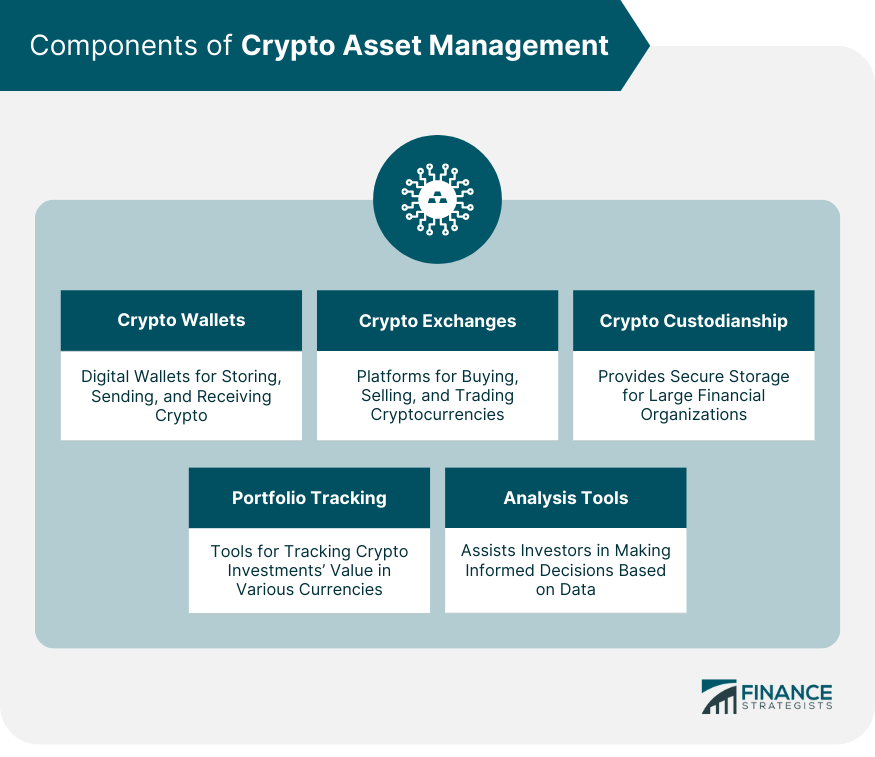
The digital asset ecosystem introduces a distinct array of risks that often differ significantly from those encountered in traditional finance. Acknowledging and categorizing these unique challenges is the first step toward effective mitigation.
Market Volatility Risk
Cryptocurrencies are renowned for their extreme price fluctuations. Assets can experience double-digit percentage changes within hours, driven by a myriad of factors including speculative trading, macroeconomic events, regulatory news, technological advancements, and even social media sentiment. This volatility risk can lead to rapid capital depreciation if not properly managed, making accurate timing and risk tolerance assessment crucial. Unlike traditional markets with circuit breakers, crypto markets operate 24/7 with no central authority to halt trading, exacerbating potential losses during sharp downturns.
Security and Cyber Risk
The decentralized nature of blockchain, while a strength, also opens specific attack vectors. Security risk encompasses threats such as:
* Exchange Hacks: Centralized exchanges holding large sums of user funds are prime targets for cyberattacks, leading to significant losses.
* Wallet Compromises: Private keys are the sole control mechanism for crypto assets. Loss, theft, or compromise of these keys (e.g., through phishing, malware, or insecure storage) can result in irreversible asset loss.
* Smart Contract Vulnerabilities: Decentralized finance (DeFi) protocols rely on smart contracts. Bugs, exploits, or design flaws in these contracts can lead to millions of dollars being drained, as seen in numerous incidents.
* Phishing and Social Engineering: Scammers often employ sophisticated tactics to trick users into revealing sensitive information or transferring assets.
Regulatory and Legal Risk
The global regulatory landscape for crypto assets is fragmented, evolving, and often ambiguous. This regulatory risk introduces uncertainty regarding the legality, classification, and tax treatment of various digital assets and activities. Governments and regulatory bodies worldwide are still developing frameworks, and sudden changes in policy can significantly impact market prices and the viability of certain crypto projects or businesses. Non-compliance can lead to severe penalties, fines, or even criminal charges. The lack of a unified legal framework also complicates cross-border transactions and dispute resolution.
Operational Risk
Operational risks in crypto involve the potential for losses due to inadequate or failed internal processes, people, and systems, or from external events. This includes:
* Exchange Failures: Beyond hacks, exchanges can suffer outages, insolvency, or simply poor operational management, limiting access to funds or causing complete loss.
* Human Error: Mistakes in sending transactions (e.g., wrong address, incorrect amount, forgotten memo tags) can result in irretrievable loss due to the immutable nature of blockchain transactions.
* Network Congestion and Fees: During periods of high demand, blockchain networks can become congested, leading to delayed transactions and exorbitant gas fees, impacting liquidity and trade execution.
* Custodian Risk: For institutions relying on third-party custodians, the reliability, security, and financial health of the custodian become an additional layer of risk.
Liquidity Risk
Liquidity risk refers to the difficulty of converting a crypto asset into cash or other assets without significantly affecting its price. While major cryptocurrencies like Bitcoin and Ethereum generally have high liquidity, smaller altcoins or newly launched tokens can have thin trading volumes. This can make it challenging for investors to exit large positions quickly without incurring substantial slippage, especially during market downturns, potentially trapping capital.
Laying the Foundation: Key Principles of Crypto Asset Risk Management
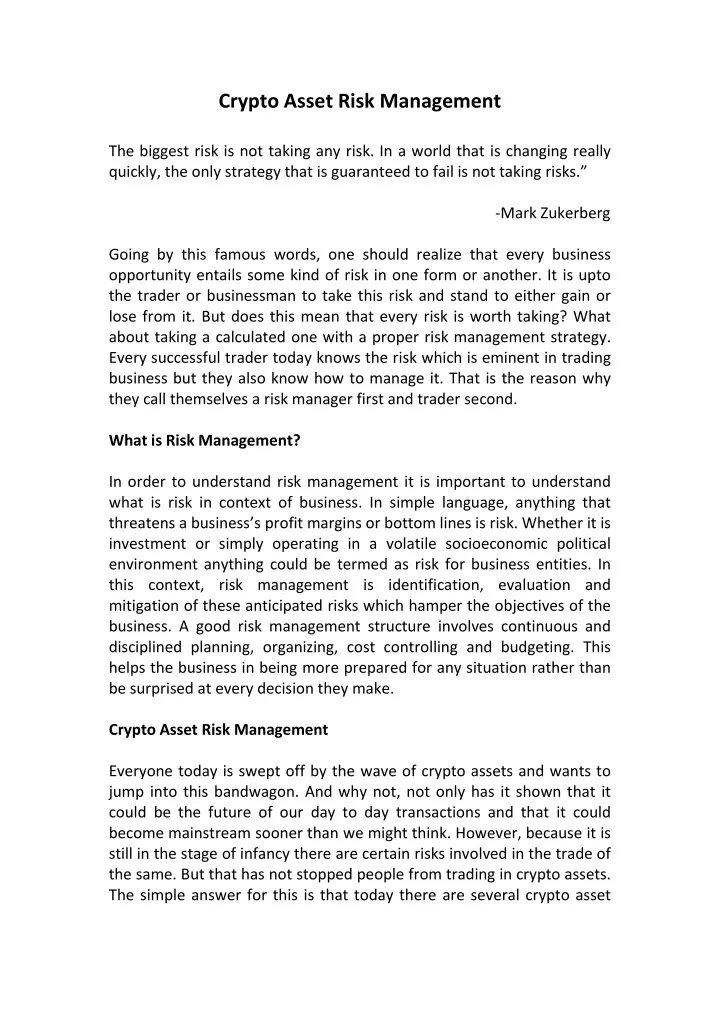
Effective crypto asset risk management begins with establishing a strong foundational understanding of core principles that guide sound decision-making in this volatile space. These principles apply to individual investors and large institutions alike.
Due Diligence and Research
Before investing in any crypto asset, thorough due diligence is non-negotiable. This involves in-depth research into the project's whitepaper, underlying technology, use case, team background, tokenomics, community support, and competitor landscape. Understand the problem the project aims to solve, its market potential, and its technological feasibility. A critical eye should be applied to claims and promises, recognizing that many projects fail or are outright scams. Evaluating the audit history of smart contracts for DeFi projects is also crucial.
Diversification
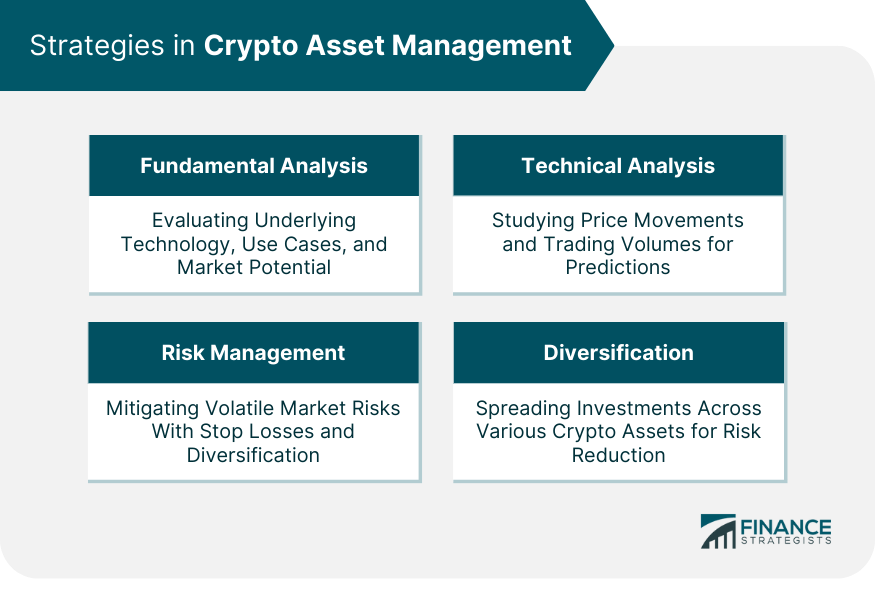
Just as in traditional finance, diversification is a powerful tool to mitigate risk. Instead of putting all capital into a single asset, spreading investments across multiple cryptocurrencies with different use cases, technologies, and market capitalizations can reduce the impact of a poor performance by any single asset. For instance, diversifying across foundational assets (Bitcoin, Ethereum), DeFi protocols, Layer 1 solutions, and potentially NFTs or metaverse tokens can create a more balanced portfolio. However, over-diversification can also dilute returns and make portfolio management unwieldy.
Position Sizing and Risk Allocation
Position sizing involves determining the appropriate amount of capital to allocate to each investment. This should be directly correlated with your risk tolerance and the perceived risk of the asset. Never invest more than you can afford to lose. For highly volatile or speculative assets, a smaller position size is prudent. Institutions often employ sophisticated risk allocation models based on Value at Risk (VaR) or Conditional Value at Risk (CVaR) to manage their exposure across a portfolio of digital assets. Establishing clear limits on exposure to any single asset, protocol, or counterparty is a cornerstone of this principle.
Defining Risk Tolerance
Understanding your personal or organizational risk tolerance is paramount. Are you comfortable with significant price swings for the potential of high returns, or do you prefer more stable, albeit potentially lower-return, assets? Your financial goals, time horizon, and current financial situation should dictate your risk appetite. For institutions, this involves a clear board-level mandate and a well-defined risk management policy that outlines acceptable levels of risk, stop-loss thresholds, and liquidity requirements.
Implementing Robust Security Measures
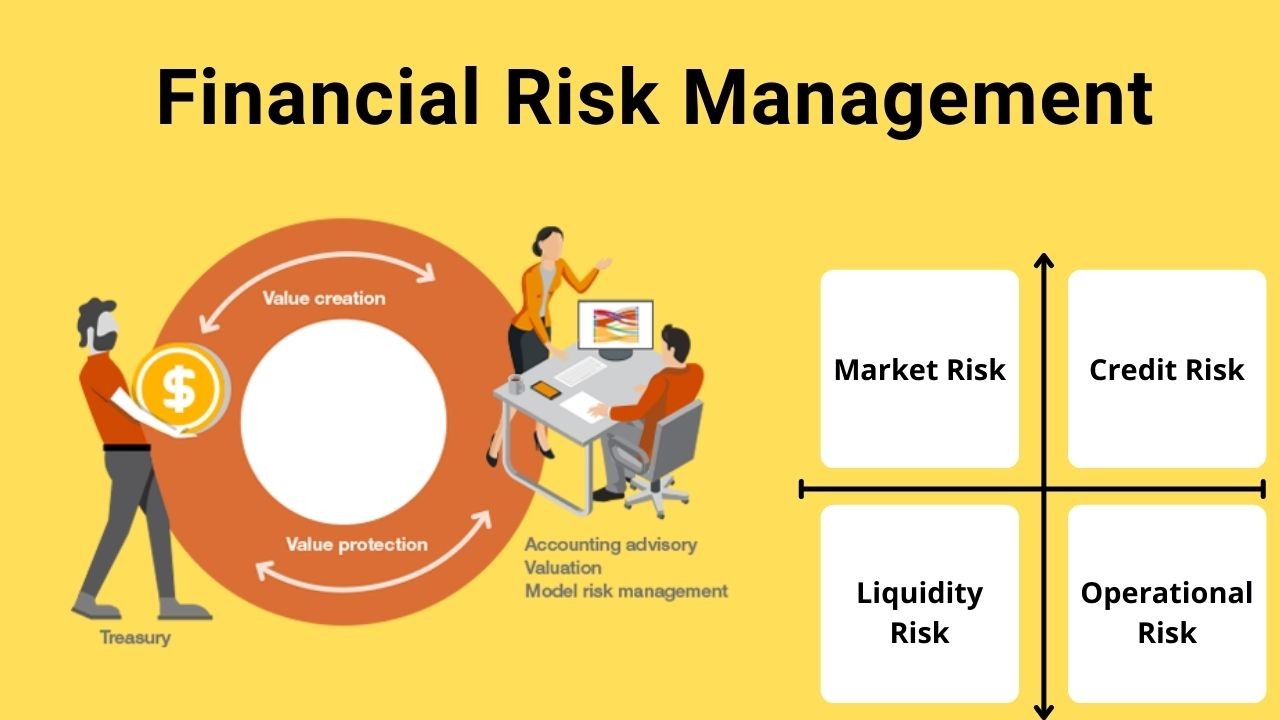
Given the immutable nature of blockchain transactions and the prevalence of cyber threats, robust security measures are the bedrock of any sound crypto asset strategy. Without proper security, all other risk management efforts are futile.
Cold Storage vs. Hot Wallets
The choice of wallet dictates a significant portion of your security posture.
* Cold Storage (Hardware Wallets/Paper Wallets): These store private keys offline, making them impervious to online hacking attempts. For significant holdings or long-term investments, cold storage, such as a Ledger or Trezor device, is strongly recommended.
* Hot Wallets (Software Wallets/Exchange Wallets): These are connected to the internet, offering convenience for frequent transactions but higher exposure to online threats. Use hot wallets only for smaller amounts needed for active trading or immediate spending. Avoid keeping substantial balances on exchanges.
Multi-Factor Authentication (MFA)
Always enable Multi-Factor Authentication (MFA) on all cryptocurrency exchanges, wallets, and any associated accounts (e.g., email, cloud storage). Options include SMS-based codes, authenticator apps (like Google Authenticator or Authy), or hardware security keys (like YubiKey). Authenticator apps are generally more secure than SMS due to SIM-swap risks.
Strong Passwords and Phishing Awareness
Use unique, complex passwords for every crypto-related account, preferably generated by a reputable password manager. Crucially, remain vigilant against phishing attempts. Always double-check URLs, verify senders of emails, and be suspicious of unsolicited messages or too-good-to-be-true offers. Never click on suspicious links or download attachments from unknown sources. Remember, legitimate crypto services will rarely ask for your private keys or seed phrases.
Smart Contract Audits and Due Diligence for DeFi
Before interacting with any Decentralized Finance (DeFi) protocol or DApp, ensure its smart contracts have undergone independent security audits by reputable firms. While an audit doesn't guarantee invulnerability, it significantly reduces the risk of exploitable bugs. Beyond audits, understand the protocol's mechanics, its TVL (Total Value Locked), and the reputation of its developers and community. Be wary of unaudited or newly launched projects promising exceptionally high yields.
Regular Software Updates and Network Security
Keep all operating systems, antivirus software, and wallet applications updated to the latest versions. These updates often contain critical security patches. Furthermore, ensure your personal network is secure – use a strong Wi-Fi password, consider a VPN, and avoid using public Wi-Fi for sensitive crypto transactions.
Navigating Market Volatility and Liquidity Risks

Managing the inherent price swings and potential illiquidity of crypto assets requires a combination of strategic planning and disciplined execution.
Dollar-Cost Averaging (DCA)
Dollar-Cost Averaging (DCA) is a strategy where you invest a fixed amount of money at regular intervals (e.g., weekly, monthly), regardless of the asset's price. This approach reduces the impact of volatility by averaging out the purchase price over time. You buy more units when prices are low and fewer when prices are high, mitigating the risk of making a single, poorly timed lump-sum investment at a market peak. DCA encourages a long-term perspective and removes emotional biases from investing decisions.
Stop-Loss Orders and Take-Profit Levels
For active traders, implementing stop-loss orders on exchanges can limit potential downside by automatically selling an asset if its price falls to a predetermined level. Conversely, setting take-profit levels allows you to lock in gains when an asset reaches a target price. While useful, be aware that stop-loss orders can be "wicked" out in highly volatile markets, meaning a brief price dip might trigger your stop before a recovery. For long-term investors, simply having mental stop-losses and avoiding checking portfolios constantly can reduce stress.
Monitoring Market Indicators and On-Chain Data
Staying informed about market indicators and on-chain data can provide valuable insights into market sentiment and potential movements. This includes monitoring trading volumes, funding rates in perpetual futures markets, large whale movements, exchange inflows/outflows, and network activity (e.g., transaction counts, active addresses). While not foolproof predictors, these metrics can help anticipate shifts in demand or supply. Technical analysis (chart patterns, indicators) and fundamental analysis (project developments, news) also play roles in informed decision-making.
Understanding Slippage, Especially in DeFi
When trading assets, particularly those with lower liquidity, slippage can occur. This is the difference between the expected price of a trade and the price at which the trade is actually executed. In highly volatile or low-liquidity markets (common in certain DeFi pools), slippage can be significant, especially for large orders. Always check your slippage tolerance settings on decentralized exchanges (DEXs) before confirming a trade, and be prepared for potential price discrepancies.
Avoiding Emotional Trading (FOMO/FUD)
One of the most significant risks in volatile markets is letting emotions dictate trading decisions. Fear Of Missing Out (FOMO) can lead to buying at market tops, while Fear, Uncertainty, and Doubt (FUD) can trigger panic selling at market bottoms. Develop a clear investment plan, stick to it, and avoid impulsive decisions based on social media hype or momentary market swings. Regular rebalancing of your portfolio can help maintain your desired asset allocation without emotional interference.
Regulatory Compliance and Legal Considerations
The fragmented and rapidly evolving regulatory landscape for crypto assets poses significant risks, making proactive compliance and legal awareness indispensable for anyone engaging with digital assets.
Jurisdictional Awareness
Understanding the specific laws and regulations governing crypto assets in your own jurisdiction, as well as those jurisdictions where you operate or where the assets or services are based, is paramount. Different countries, and even different states or provinces within a country, have varying approaches to digital assets, from outright bans to embracing innovation. What is legal in one place may be prohibited in another. Staying informed about these local nuances helps avoid legal pitfalls and ensures compliance.
AML/KYC Protocols
Anti-Money Laundering (AML) and Know Your Customer (KYC) regulations are increasingly being applied to cryptocurrency exchanges and service providers globally. Compliance with these protocols involves verifying user identities and monitoring transactions for suspicious activities. For individuals, this means being prepared to provide personal identification to legitimate platforms. For businesses, implementing robust AML/KYC frameworks is crucial to avoid heavy fines and reputational damage. Ignoring these requirements can link you to illicit activities, even inadvertently.
Tax Implications
Cryptocurrency transactions often have significant tax implications. Most jurisdictions consider cryptocurrencies as property for tax purposes, meaning capital gains taxes may apply to profits from selling, trading, or spending crypto. Income received in crypto (e.g., from mining, staking, or airdrops) is also typically taxable. Accurate record-keeping of all transactions, including purchase dates, costs, sale prices, and transfer fees, is essential for correct tax reporting. Consult with a tax professional specializing in digital assets to ensure compliance with local tax laws.
Staying Updated on Evolving Regulations
The regulatory environment for crypto is dynamic. New laws, guidelines, and interpretations are issued regularly. Subscribing to reputable industry news sources, legal alerts, and government announcements is vital for staying ahead of changes that could impact your holdings or operations. Participating in industry associations and engaging with policymakers can also provide early insights and influence future regulations. This proactive approach helps mitigate the risk of non-compliance and allows for strategic adaptation.
Advanced Strategies for Crypto Asset Risk Management
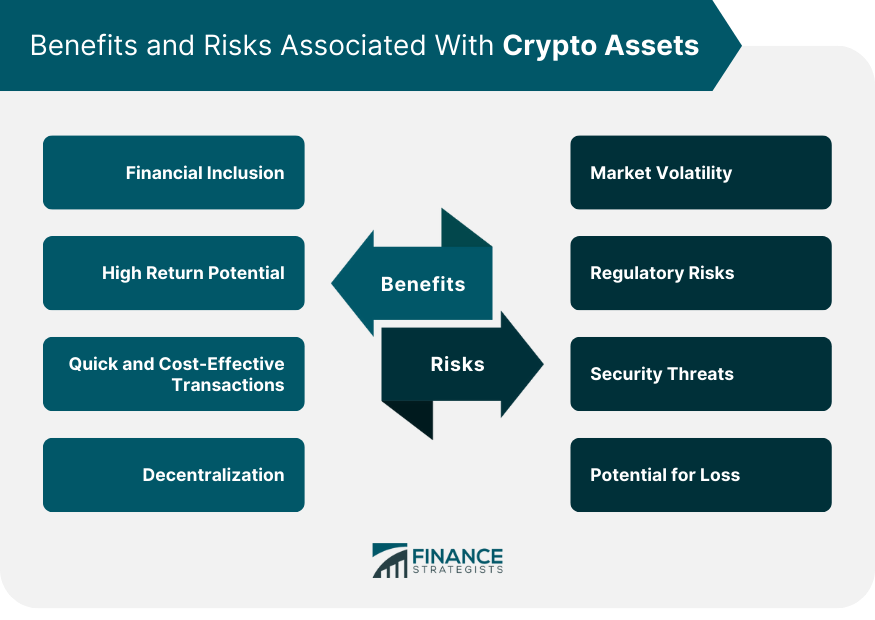
Beyond the foundational principles, advanced strategies can further refine risk mitigation for sophisticated investors and institutional players in the crypto space.
Hedging with Derivatives
For those looking to mitigate exposure to price volatility without selling their underlying assets, crypto derivatives offer advanced hedging opportunities. Futures contracts, for instance, allow you to lock in a future price for an asset, while options contracts provide the right, but not the obligation, to buy or sell an asset at a specific price. These instruments can be used to protect against downside risk (e.g., by shorting futures or buying put options) or to generate income (e.g., by selling call options). However, derivatives are complex and carry their own leverage and liquidation risks, requiring a deep understanding before use.
Exploring Insurance Solutions
The nascent crypto insurance market is growing, offering solutions to protect against specific risks such as exchange hacks, smart contract vulnerabilities, or even custodian insolvency. Both traditional insurers and decentralized insurance protocols (like Nexus Mutual or InsurAce) are emerging, providing coverage options for individual assets, DeFi protocols, or institutional custody solutions. While still evolving, these insurance products can provide an additional layer of financial protection against certain catastrophic events, albeit at a cost.
Understanding Yield Farming and DeFi Risks
While attractive for potential high returns, yield farming and participation in complex DeFi protocols introduce unique and often heightened risks. These include:
* Impermanent Loss: A risk in providing liquidity to automated market maker (AMM) pools, where the value of your staked tokens can diverge from simply holding them, potentially resulting in a net loss.
* Smart Contract Risk: As mentioned, bugs or exploits in the underlying code of DeFi protocols can lead to total loss of funds.
* Oracle Attacks: DeFi protocols often rely on external data feeds (oracles) for price information. Manipulation of these oracles can lead to incorrect liquidations or exploits.
* Rug Pulls: Malicious developers abandoning a project and siphoning off liquidity, leaving investors with worthless tokens. Thorough due diligence, starting with smart contract audits, is paramount before engaging in yield farming or interacting with new DeFi protocols.
Institutional Custody Solutions
For institutions holding significant amounts of crypto assets, sophisticated custody solutions are critical. These typically involve:
* Qualified Custodians: Regulated third-party providers specializing in secure storage of digital assets, often with insurance and robust security protocols.
* Multi-Signature (Multisig) Wallets: Requiring multiple private keys to authorize a transaction, distributing control and preventing a single point of failure.
* Hardware Security Modules (HSMs): Dedicated physical devices for generating and storing cryptographic keys in a highly secure environment.
* Cold Wallets in Secure Facilities: Storing private keys in offline, geographically dispersed, and highly guarded vaults.
Building a Comprehensive Crypto Asset Risk Management Framework
For any serious participant in the crypto space, particularly businesses and institutions, a structured and comprehensive crypto asset risk management framework is indispensable. This framework should be dynamic, adaptable, and integrated into overall operational strategies.
Developing an Internal Policy
Establish a clear, written internal policy for all crypto-related activities. This policy should outline:
* Risk Appetite: Clearly define the organization's tolerance for various types of crypto risks.
* Investment Guidelines: Specify which assets can be held, maximum exposure limits, and approval processes for new investments.
* Security Protocols: Detail requirements for wallet management, private key storage, access controls, and cybersecurity measures.
* Compliance Procedures: Outline how the organization will adhere to AML/KYC, tax, and other regulatory obligations.
* Roles and Responsibilities: Assign clear ownership for risk management tasks.
Regular Risk Assessments
The crypto landscape is constantly evolving, requiring regular risk assessments. This involves systematically identifying, analyzing, and evaluating potential risks across the entire digital asset portfolio and associated operations. Periodically review market conditions, technology updates, regulatory changes, and internal processes to identify new or emerging threats. Risk assessments should be iterative, allowing for the continuous refinement of mitigation strategies.
Incident Response Planning
Despite best efforts, incidents can occur. A well-defined incident response plan is crucial. This plan should detail:
* Detection and Notification: How potential security breaches, operational failures, or significant market events are identified and reported.
* Containment: Steps to limit the damage from an incident (e.g., isolating compromised systems, moving funds to secure addresses).
* Eradication: Measures to remove the cause of the incident.
* Recovery: Steps to restore normal operations and mitigate losses.
* Post-Incident Analysis: Learning from the event to improve future risk management.
* Communication Strategy: How to inform stakeholders (internal and external) during an incident.
Education and Training
The human element is often the weakest link in any security chain. Continuous education and training for all personnel involved in crypto operations are vital. This includes:
* Cybersecurity Best Practices: Training on phishing awareness, strong password hygiene, and secure software usage.
* Blockchain Fundamentals: Ensuring a basic understanding of how blockchain technology works, transaction finality, and private key management.
* Protocol-Specific Training: For teams interacting with DeFi or complex protocols, providing detailed training on their unique risks and functionalities.
* Regulatory Updates: Keeping the team informed about new compliance requirements.
Conclusion
The digital asset space, while promising unprecedented innovation and financial returns, is inherently complex and riddled with unique risks. Effective crypto asset risk management is not merely an optional add-on but a fundamental necessity for sustainable engagement. From understanding the nuances of market volatility, cyber threats, and evolving regulations to implementing robust security measures and strategic investment principles, a disciplined and proactive approach is paramount.
By embracing thorough due diligence, diversifying portfolios, leveraging secure storage solutions, staying abreast of regulatory changes, and continuously educating oneself and one's team, participants can significantly mitigate potential pitfalls. As the industry matures, so too will the tools and frameworks available for managing these risks. However, the core tenets remain: vigilance, education, and a commitment to adapting strategies in a rapidly changing environment. Mastering crypto asset risk management now is not just about avoiding losses; it's about confidently navigating this frontier to unlock its full potential while safeguarding your digital wealth.